
by Prog Nick
It seems that fans have finally abandoned their demand for a version of Pattern-Seeking Animals (P-SA) that is a replacement act for Spock’s Beard. The Beard are, of course, back and thriving with a new drummer and a new album, and this fact is satiating most fans. P-SA, if indeed they ever intended to be a Beard replacement (which now seems highly doubtful), simply never conformed to that expectation. They have always sounded intentionally different, and that is ok.
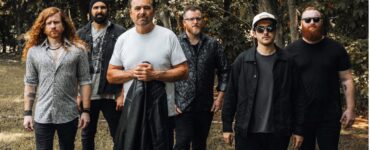
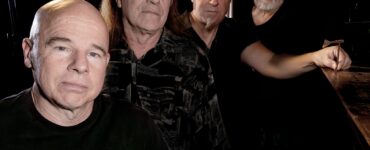
For those who might not know, P-SA are Ted Leonard (vocals and guitars), Jimmy Keegan (drums and vocals), Dave Meros (bass and vocals) and John Boegehold (synths, mellotron, guitars, mandocello, vocals and main composer.) The Spock’s Beard connections, of course, are strong: Leonard and Meros remain members of The Beard, Keegan is a respected ex-member, and Boegehold was an erstwhile co-composer for the band, particularly during its post-Neal Morse phases.
It seems to me that today, P-SA is really Boegehold’s project, even though he eschews performing with the band live. As the main composer, his very particular sound is stamped all over P-SA’s recordings, and the band’s latest (and sixth) album, ‘Grimalkin’, is no exception.
Apparently a ‘grimalkin’ is a supernatural grey cat that becomes a witch’s familiar, as dramatized in Shakespeare’s ‘Macbeth.’ The album has a suitably proggy title then, but the traditional prog stylings mostly end there, with the album featuring largely uncomplicated time-signatures, soulful vocal ballads and mid-tempo rock arrangements that are more cinematically elaborate than classically progressive. Of course, the legendary performance skills of Leonard, Keegan and Meros are not easily diluted into anything that could be described as uninteresting, and there are some recognisably proggy moments on the album to be sure, but you should not expect the composition or production to present anything like the next Close To The Edge.
Having said that, the album is a generally pleasing foray into the highly visual mind of John Boegehold. He seems to enjoy delivering image-laden compositions that consistently describe cinematic narratives and vivid filmic themes. This approach is bolstered by the consistent use of instruments that might well be used by the music supervisors or arrangers on such movies – such as trumpet/horns for Western themes, organs for supernatural moods and tympani and strings for dramatic effects. The result is that in many places, this album does not sound far removed from a film soundtrack, and the film in question happens to be a cross-genre one.
There are four longer tracks (of eight minutes or so) in ‘Maybe All a Dream’, ‘A Flower Yet to Grow’, ‘Break Away’ and ‘Slowly Falls the Flying Man’, with the latter two tracks being the undisputed high points of the album. The remaining four tracks are more concise and to the point, being ‘Jade Sky’, ‘Things I Don’t Do’, ‘Traveler on the Wrong Road Home’ and ‘I Dream the World.’
‘Maybe all a Dream ‘ starts with an extended cinematic soundscape introduction that thankfully soon gives way to a solid 7/4 rock groove from Keegan and full, warm performances from the band, including a jolly clap-along chorus. The harmonies are particularly polished and the instruments highly varied – a technique that has become synonymous with Boegehold’s work. At one point the track slows to half-time and an excellent, note-bending guitar solo is delivered by Leonard before the song fades away with some wistful flute.
‘A Flower Yet to Grow’ starts promisingly enough with a dainty piano melody, after which Meros takes over with his thunderous bass tone, showing that he remains one of the most recognisable bassists in modern music. Leonard’s vocal range is tested in this song, but as always, he somehow conquers the extreme registers demanded of him. As far as the arrangement goes, the slow mid-section takes the risk of sounding a little schmaltzy, and the Oriental stabs that follow it could certainly have been cut. But the track is rescued by Leonard’s consistent vocals, as well as his delivery of another fine electric solo, this time using a languid but very crisp guitar tone.
With ‘Jade Sky’, the cinematic instrumentals sound a little too much like a spaghetti western, and the track seems to have been written in a key that is slightly too high to be suited to Leonard’s fine voice. Meanwhile, ‘Things I Don’t Do’ is a short ballad about lost love. It has a very beautiful melody, and Leonard’s voice is very well harmonised with a female backing vocal, but the dramatically spoken phrase ‘It’s meant to be’ does slightly interrupt the melodic flow.
‘Break Away‘, on the other hand, is a lot more adventurous and features some very interesting sections, especially the chorus, which is quite intricate. There is an omniscient keyboard arpeggio that pops up with regularity during the song, and it is very pleasing and new -sounding. Leonard seems to be singing about the details of a murder scene, and one feels that ‘Break Away’ is therefore perhaps the one track that should have featured more cinematic soundscapes, yet ironically, it works well without them. The innovative mid-section gives way to another highly melodic Leonard lead solo and one realises that he really is an underrated guitarist. Meros’ always massive bass sound is featured on the track and he even gets the chance to solo for a few bars before the coda section. A varied and rounded production, ’Break Away’ is, all in all, a very good song indeed.
One cannot help but be curious if leaving off the Mexican/Western-sounding horns out of ‘Traveller on the Wrong Road Home’ would have benefited an otherwise great track featuring Leonard at his best. His delivery of the lyrics, paired with the strings solos, are more than enough to express the desert theme of the song, and this renders the horns somewhat redundant, to my ears at least.
Matters become quite medieval and Tudor-sounding in ‘Slowly Falls the Flying Man’ which is far and away the best track on the album. At over eight minutes, this track achieves the true vision that one believes Boegehold must have held for this record. Built around Leonard’s always fine vocals, the song develops into a perfect exposition of taste, variety, balance, and emotion. After the Tudor intro that is accompanied by Leonard’s plaintive vocal, the band ushers in some fine slow Rock, and these two styles alternate like a pendulum for the rest of the song. The core of the song is a wonderful vocal progression section in 7/4 that will please any Melodic Prog aficionado out there. The track is full of tasteful surprises, including a recorder solo, an excellent Joe Deninzon violin solo, a Keegan marching snare section, a very competent Boegehold synth solo, straight-ahead rock parts, odd-time instrumental sections, harmony vocals and so much Prog. Mission more than accomplished with this excellent track – if you want a taster of the best of this album (and possibly of this band), ‘Slowly Falls the Flying Man’ is the one to listen to.
The album closes with ‘I Dream the World’, a more than acceptable pop song with a very catchy hook. It could have been recorded in the 1980’s, but it also features some innovative modern Boegehold keyboard tones.
The album was produced by John Boegehold and mixed and mastered by Frank Rosato, with artwork and design by Laura Nagel and Thomas Ewerhard. To my ears, the audio production is of a high quality (particularly Keegan’s drum mix), though some have commented that the album sounds somewhat generally too compressed for their tastes. I am not one of them. While this might not have the detail and power of say, a Rich Mouser production, I feel that it is a full, balanced, clear and well-mixed production.
After repeated listens, I have indeed come to enjoy ‘Grimalkin’ more and more. The regular cinematic references notwithstanding, it is a well-written album with predictably excellent performances from some of the most accomplished veteran performers around. It is clear that John Boegehold has a vision for P-SA, and that vision is to take the abounding talent in this band, utilise it in a dedicated, targeted way, compose good Rock songs for it, and employ cinematic soundscapes to set those songs apart. Whether you like the use of Mexican horns in Rock Music or not, the point is that this cinematic technique makes P-SA sound somewhat different to the rest of the bands out there, including Spock’s Beard. And that, as I said, is more than ok.
1. Maybe All a Dream
2. A Flower Yet to Grow
3. Jade Sky
4. Things I Don’t Do
5. Break Away
6. Traveler on the Wrong Road Home
7. Slowly Falls the Flying Man
8. I Dream the World